A Season of Giving — The UAE’s Humanitarian Commitment in Ramadan
Ramadan is the ninth month of the Islamic calendar, observed by Muslims worldwide as a time of fasting from dawn to sunset, spiritual reflection, and renewed devotion. It is also a month defined by generosity. Across the Muslim world, fasting is accompanied by giving — a recognition that compassion is not complete unless it reaches beyond oneself. Charity during Ramadan is not simply encouraged; it is embedded in the spiritual rhythm of this holy month. It is a reminder that dignity, nourishment, and care should be shared.
In the UAE, this ethos of giving intensifies during Ramadan, but it does not begin nor end there. Rather, the holy month becomes a focal point, a moment when the nation’s long-standing humanitarian commitment expands in scale and visibility, reinforcing systems of support that operate year-round.
“Ramadan Mubarak. A month of mercy, blessings, and generosity. A season of giving, compassion, and unity. May Allah bless our nation, leadership, and people, as well as the Arab and Islamic communities, with goodness and prosperity.”
— His Highness Sheikh Hamdan bin Mohammed bin Rashid Al Maktoum, Crown Prince of Dubai, Deputy Prime Minister and Minister of Defence of the UAE
Each Ramadan, government entities, humanitarian organisations, foundations, and volunteers mobilise in coordination. What appears as seasonal generosity is in fact part of a broader structured ecosystem of aid.
In 2026, the Emirates Red Crescent (ERC) announced that its Ramadan programmes would benefit more than 1.5 million people across 44 countries, at a cost exceeding AED 60 million. The initiatives include Ramadan food baskets, Iftar meals for fasting individuals, Zakat Al Fitr distributions, and Eid clothing, reaching vulnerable families both within the UAE and internationally.
“The increased allocations for this year’s Ramadan campaign have contributed to expanding the scope of beneficiaries locally and internationally and strengthening sustainable humanitarian impact.”
—Ahmed Sari Al Mazrouei — Secretary‑General of ERC
For a family receiving a Ramadan food parcel in a remote village, the impact is immediate: a table set with dignity at sunset. For a child receiving Eid clothing, it is a moment of belonging. Behind each parcel and each meal is a coordinated system — procurement, logistics, volunteer mobilisation, and international partnerships — ensuring aid reaches those most in need.
One such example is the International Charity Organisation (ICO), established in Ajman in 1984, which has grown into one of the UAE’s longstanding humanitarian institutions operating in 23 countries. During Ramadan 2025, the ICO launched a Dh165 million humanitarian drive, delivering more than 615,000 iftar meals in the UAE and internationally, a reflection of how seasonal generosity can translate into global impact.
Of these, 315,000 meals reached highly impoverished regions abroad, alongside 22,000 food parcels distributed across more than 450 villages internationally. Within the UAE, the organisation provided a further 300,000 iftar meals, 3,500 Ramadan food baskets, and 80,000 Zakat Al Fitr donations to families in need before Eid. But the initiative extended far beyond immediate nourishment, supporting the construction of 258 mosques, the drilling of 1,000 water wells in water-scarce areas, and assistance for 60,000 orphans, alongside medical care, debt relief, and income-generating family projects.
“Crucial support from the public had helped exceed the initial targets of the campaign and reiterated the UAE’s commitment to providing assistance to vulnerable people in all corners of the globe.”
— Sheikh Dr. Mohammed bin Abdullah Al Nuaimi — Chairman, ICO Board of Trustees
Beyond long-established institutions such as the ICO, Ramadan also saw coordinated action across multiple UAE humanitarian entities in direct response to crisis settings. As part of Operation Chivalrous Knight 3, Al Ihsan Charity Association, Sharjah Charity International, and Dar Al Ber Society delivered 100 tonnes of Ramadan food supplies and 5,000 copies of the Holy Qur’an to Gaza.
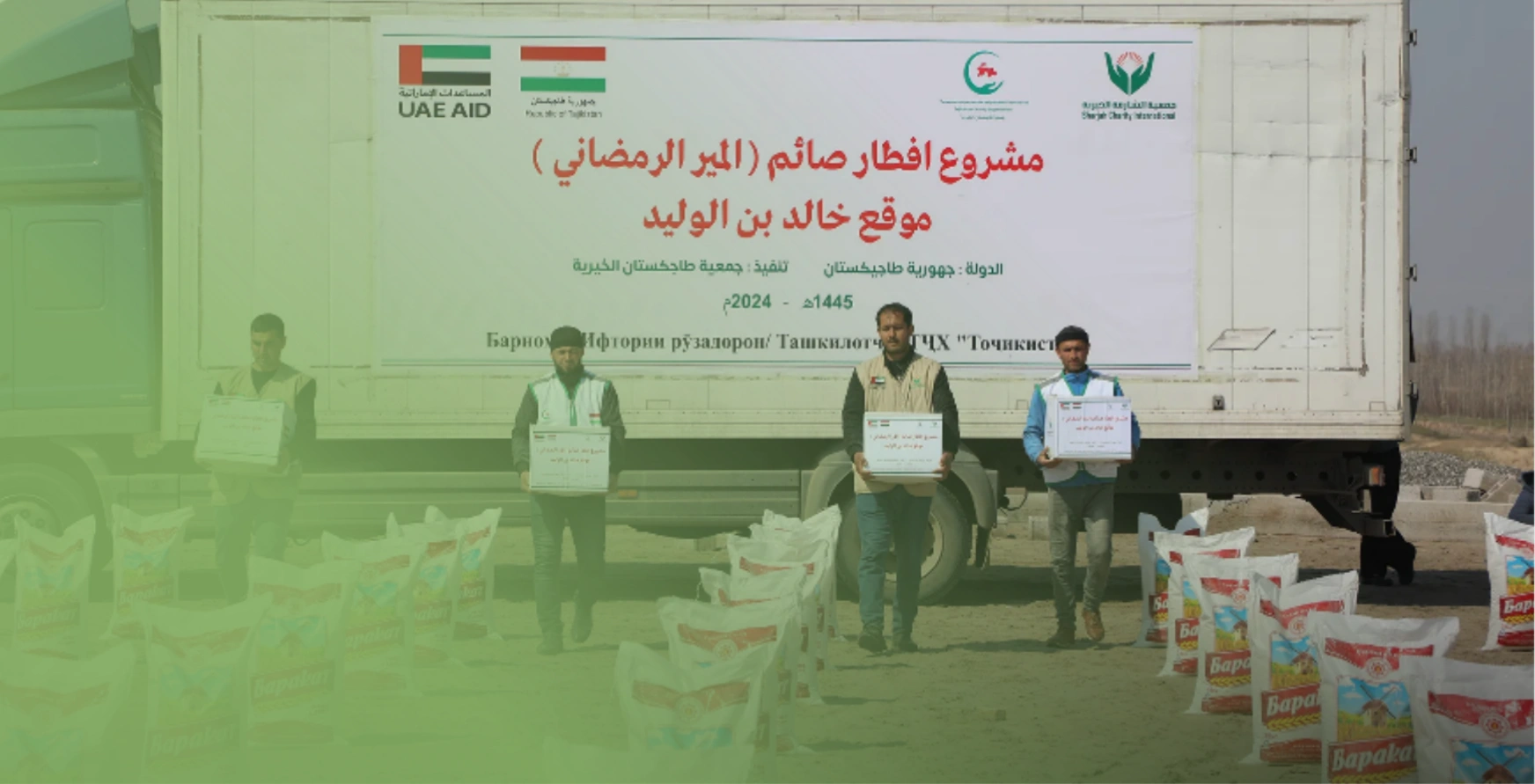
At the federal level, the UAE Ministry of Finance also marked Ramadan through a series of initiatives reflecting the nation’s values of solidarity and inclusion. Campaigns such as “Ramadan Mir,”“Supporting Humanitarian Cases,”“Inspired by Zayed’s Generosity,” and “Eid Gifts on Us” extended support to vulnerable families and individuals through food basket distributions, medical and health assistance, and targeted humanitarian support. The initiatives also incorporated inclusion-focused activities during Eid Al Fitr, reinforcing that Ramadan giving is not limited to food provision alone, but encompasses dignity, wellbeing, and community belonging.
These were not standalone seasonal gestures. It was Ramadan generosity integrated into an ongoing humanitarian mindset, linking spiritual giving with structured, long-term relief efforts. Under the guidance of UAE leadership, Ramadan became not only a month of reflection, but a moment to scale support where need was most urgent.
For volunteers across the UAE, Ramadan is often a first step into service. Packing food parcels, preparing Iftar meals, or coordinating donations becomes a gateway into deeper engagement with humanitarian work. The culture of giving — al-‘aṭā’ al-Imārātī — is both spiritual and practical, expressed in hands that serve and systems that sustain.
As the crescent moon marks the beginning of Ramadan each year, it signals not only a time of spiritual renewal, but a renewal of responsibility. Through coordinated seasonal campaigns and sustained long-term programmes, the UAE continues to transform moments of giving into lasting impact, ensuring that the spirit of Ramadan lives on long after the month has ended.