Building Systems That Last: UAE–Indonesia Partnership in Action
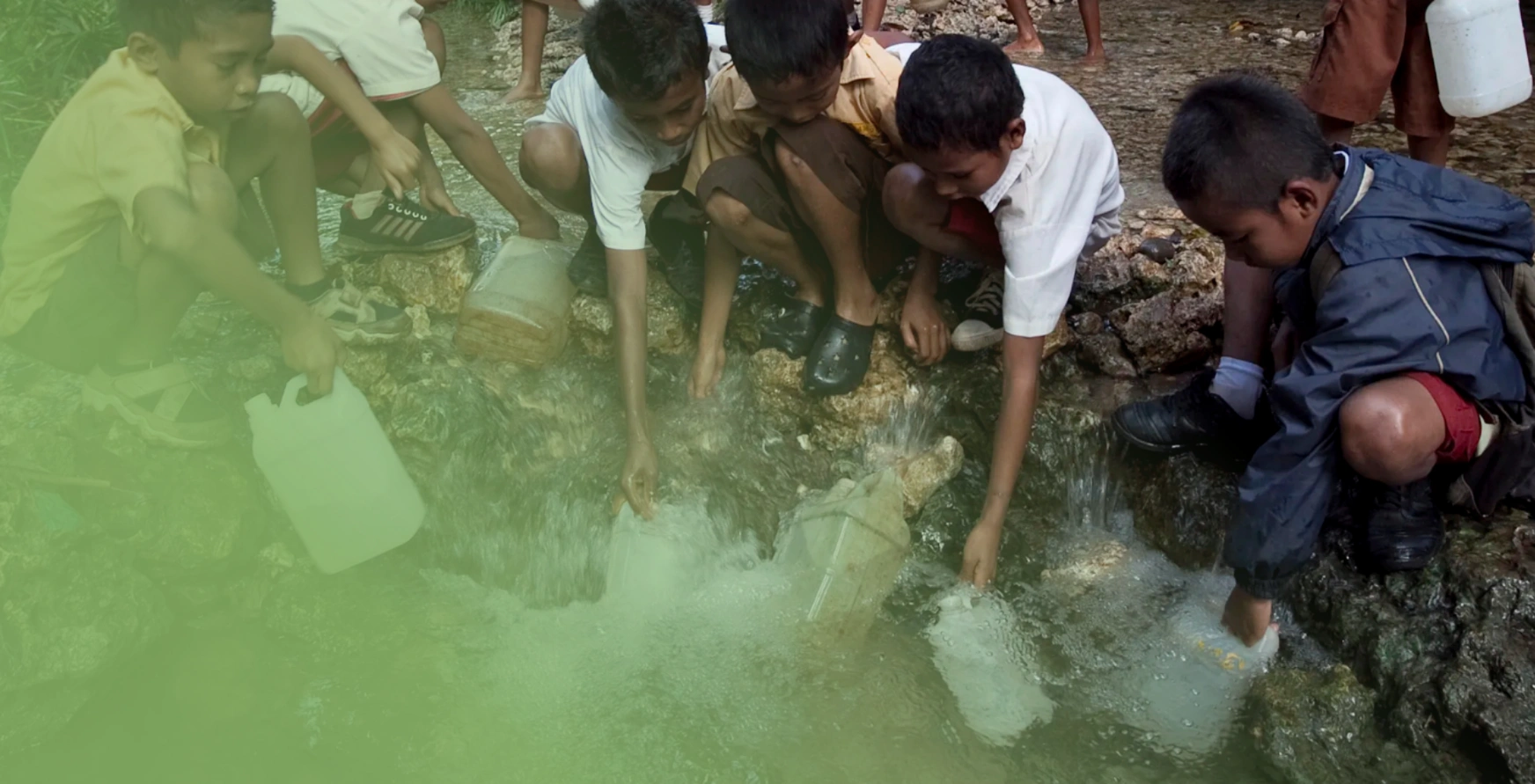
Along the banks of Indonesia’s rivers, daily life unfolds in close relationship with water. Rivers feed families, carry livelihoods, and connect communities. But for years, they have also carried a growing burden: plastic waste flowing downstream, affecting health, fisheries, and local economies. What was once a shared natural resource became a challenge.
For communities living alongside these waterways, the issue impacted routines, opportunities, and futures, and addressing it required more than a clean-up. It required transformation.
That shift began with a partnership.
On 25 April 2024, the UAE and Indonesia formalised a shared commitment to tackling plastic waste leakage into rivers and oceans through a bilateral Memorandum of Understanding (MoU), establishing a framework focused on circular economy solutions, capacity building, and long-term community impact, with the aim of preventing up to 300,000 tonnes of plastic waste from entering the ocean each year.
What followed was not a single project, but a process. As part of this cooperation, the UAE supported the launch of Clean Rivers, an Abu Dhabi–based non-profit designated as the implementing partner for translating the agreement into action. Backed by UAE support, Clean Rivers committed up to USD 20 million towards initiatives in Indonesia aimed at preventing plastic waste from entering rivers and oceans, while strengthening local waste systems and livelihoods.
“As the implementing partner of this landmark agreement, Clean Rivers will deliver a truly transformative program to tackle riverine plastic pollution in Indonesia… we advance Clean Rivers’ global mission to empower riverine communities and innovate toward a cleaner world.”
— Butti Almheiri, Clean Rivers Board Member
Working closely with Indonesian authorities and local stakeholders, Clean Rivers began laying the groundwork for systems designed to reduce waste at its source, improve infrastructure, and create economic opportunity in riverine communities.
This approach reflected the UAE’s broader development philosophy: enabling locally led solutions through coordination and sustained support. Rather than delivering one-off assistance, the UAE’s role was to bring partners together around a shared vision, aligning government priorities, community needs, and international expertise to ensure that solutions would endure.
To support implementation on the ground, Clean Rivers partnered with organisations such as the United Nations Development Programme (UNDP), working with local governments, civil society, and communities to strengthen integrated waste management systems in riverine areas. Together, these partnerships focused on behaviour change, community engagement, and circular economy models that keep materials in use while improving health, livelihoods, and environmental outcomes.
From this foundation, a total transformation began.
In Banyuwangi Regency, East Java, the effects of this approach are already evident. Once challenged by unmanaged waste flowing through its rivers, the region has become a testing ground for a different model, one that treats waste management as a public service and an economic opportunity, rather than an environmental afterthought.
By the end of 2024, the initiative had expanded access to organised waste services to more than 517,000 people, removed over 79,000 tonnes of waste, and generated around 280 full-time jobs in the local waste sector.
“I am proud of the collaborative spirit the UAE and Indonesia show in overcoming this huge challenge… Our work together on nature-based solutions gives me great hope that this cooperation will be another of our success stories.”
— Mohammed Saeed Sultan Al Nuaimi, Under-Secretary, UAE Ministry of Climate Change and Environment
UAE-supported initiatives have contributed to the development of regency-wide waste management systems designed to serve entire communities. Households that previously depended on informal dumping now have access to organised collection. Materials that once polluted waterways are recovered, sorted, and reintroduced into use.
As systems take hold, livelihoods emerge. Waste collection, sorting, recycling, and facility operations create steady jobs rooted in the local economy. These roles are part of an ongoing service model that communities rely on every day, not simply tied to a single clean-up or campaign. For families, this means income stability. For local authorities, it means greater capacity to manage public services. For communities, it means ownership.
This continuity reflects the UAE’s broader commitment in Indonesia. The UAE has invested in long-term partnerships aligned with national priorities and local needs.
With UAE-backed expansion, these systems are expected to extend sustainable waste management access to nearly 850,000 residents in Banyuwangi and generate as many as 1,000 new jobs, while contributing to a model that could benefit nearly 2 million people across Indonesia’s river systems.
Environmental outcomes, economic opportunity, and social wellbeing are treated as interconnected. Cleaner rivers support fisheries and tourism. Reliable waste services reduce health risks. Circular economy models keep value within communities instead of allowing it to flow away downstream.
Through this approach, the UAE’s role extends beyond funding or project delivery. It reflects a commitment to enabling communities to build systems they can sustain, adapt, and lead themselves. In Indonesia, this means cleaner rivers, stronger local economies, and communities equipped to manage their own resources long after external support has stepped back. This is the impact of development done differently: a partnership between the UAE and Indonesia that strengthens communities to sustain themselves, today and into the future.